

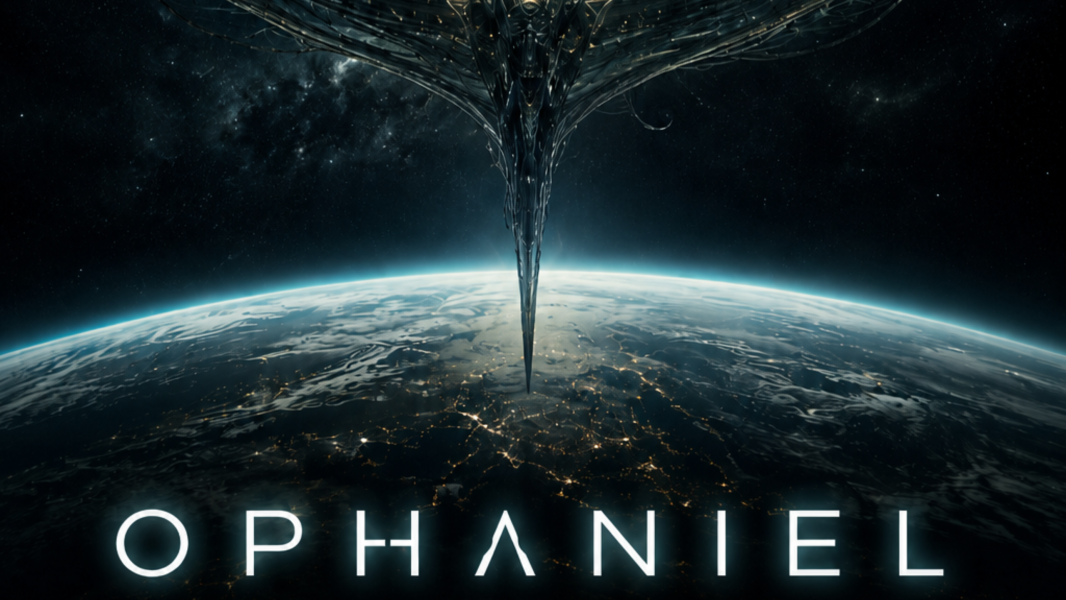
The first public-health advisory was written by a committee that did not yet believe in its own subject.
Aiden recognised the tone immediately. It had the careful unease of institutions speaking before certainty had arrived: members of the public are advised, exposure should be minimised where possible, further evidence is being gathered, there is currently no indication of infectious transmission. Every phrase had been built to withstand questioning, and every phrase failed to answer the only question that mattered.
Could looking at the sky kill you?
No one wanted to write that sentence.
Before ten in the evening, Department Seven had become a room without sleep.
The briefing chamber had been rearranged twice and improved neither time. The military personnel had multiplied. So had the screens, though none now showed Ophaniel directly. After Lucas’s reaction in the briefing room, Cross had ordered all live images of the phenomenon removed unless medically justified. The result was a room full of data trying not to become a picture.
One wall carried hospital syndromic surveillance in tables and text. Another showed social-media heat maps, flight diversions, civil-unrest indicators, and a heavily cropped feed from Geneva, where a World Health Organization emergency coordination meeting had been running for ninety-two minutes without producing language anyone liked.
The central screen remained dark where the orbital image had been.
That darkness had become its own kind of presence.
Ophaniel.
Aiden still disliked the name. It was too elegant for an unknown cause of death.
Lucas stood beside him, one hand folded against his mouth, watching a neuro-ophthalmology case series from Seoul update in real time. His jacket had been discarded over the back of a chair. His sleeves were rolled to the forearms. Under different circumstances, Aiden might have found this humanising. Under current circumstances, it made Lucas look like a man trying to operate on the sky.
Miriam Cross stood at the head of the table.
Eleanor Vale sat to her right, issuing quiet instructions into an earpiece. Colonel Hayes had not sat down since midnight. He had the exhausted righteousness of someone who believed the world would become more manageable if enough people used the word command.
A WHO official appeared on the screen from Geneva, her face flattened by compression and fatigue.
“Before we issue anything globally,” she said, “we need terminology that does not create panic.”
Lucas looked up. “If the terminology is doing more damage than the phenomenon, we have chosen the wrong problem.”
The WHO official blinked. “And you are?”
“Lucas Han. Neurologist.”
“Dr Han,” Cross said, in a tone that meant later.
Aiden said, “Panic is already occurring. The question is whether our language gives people a useful behaviour.”
“Which is?”
“Do not stare at it.”
Colonel Hayes said, “We cannot tell the entire planet not to look at the sky.”
“No,” Aiden said. “But we can tell them not to fixate on the anomaly.”
“That distinction will not survive social media.”
“Then make it simpler.”
The CDC representative, calling from Atlanta, leaned towards his camera. His room was too bright, his face too awake. Either caffeine or discipline had won.
“We are seeing three categories,” he said. “Direct visual exposure. Mediated exposure through screens or recordings. And non-visual cases, mostly paediatric and animal. The last category complicates any guidance based solely on direct viewing.”
“It does not complicate the first recommendation,” Lucas replied. “It complicates the second.”
“What second recommendation?”
“Stop broadcasting unfiltered close-up images.”
The room shifted.
That was not a medical statement. That was a political bomb.
Vale lifted her eyes from her tablet. “Every network on Earth is broadcasting it.”
“Then every network on Earth is participating in an uncontrolled exposure study.”
Hayes said, “You cannot prove that.”
Lucas turned to him. “Colonel, I cannot prove half the things in this room. That is why people are dying while we describe them.”
Aiden felt the sentence land.
Cross allowed three seconds of silence, no more.
“Dr Shen,” she said. “Can you support that recommendation medically?”
Aiden looked at the hospital map.
The pattern had changed in the last hour. The early cases had clustered around direct observation: people outside, people on rooftops, people at observatories, people gathered in public squares. Now there were indoor cases. Livestream viewers. Students watching enhanced contrast images in dormitories. A woman in Madrid who had replayed a zoomed video of the central point thirty-seven times before collapsing. A retired engineer in Manchester who had built his own optical filter and was currently ventilated in an intensive care unit.
The ring had entered screens.
Not all screens. Not all images. Not every exposure. That was the cruelty. If it had killed everyone who looked, the world would have turned away. Ambiguity was more infectious than certainty.
“At minimum,” Aiden said, “we know this: some people become unwell after looking at it, and the risk appears worse when the image is enlarged, repeated, or enhanced. That is enough to stop showing it.”
The WHO official listened without interrupting.
Aiden continued, “I can support a precautionary recommendation. Avoid direct prolonged viewing. Avoid magnified images. Avoid contrast enhancement. Avoid repeated exposure. Remove autoplay videos where possible. Use still, abstract diagrams for public communication rather than live images.”
The WHO official closed her eyes briefly. “We will be accused of censorship.”
“You will be accused of worse if you delay,” Aiden said.
The CDC representative was already typing. “We can issue as interim neurovisual exposure guidance.”
“No,” Lucas said.
The man looked up.
“Do not lead with ‘neurovisual’. It sounds technical enough for people to ignore and vague enough for politicians to soften.”
“What do you suggest?”
Lucas looked at Aiden.
Aiden did not want the responsibility.
He took it anyway.
“Observation-associated injury,” he said.
The WHO official frowned. “That is not a standard public-health category.”
“Neither is the cause.”
“‘Injury’ implies a mechanism we have not established.”
“It implies harm. We have established harm.”
Hayes said, “It also implies the object is doing something.”
Aiden turned to him. “It is.”
The colonel’s expression hardened. “You do not know that.”
“No. I know people are not injuring themselves by being dramatic. I know animals are not joining religious movements. I know a macaque with implanted electrodes did not arrest because it read misinformation online.”
No one spoke for a moment.
Then the CDC representative said, quietly, “Observation-Associated Neurovisual Syndrome.”
Aiden disliked it. It was ungainly, bureaucratic, and likely to survive.
The WHO official repeated it under her breath. “Observation-Associated Neurovisual Syndrome. OANS.”
Lucas said, “You have already made it ugly enough to be real.”
Cross said, “Use it.”
On the screen from Geneva, someone off-camera objected. The audio became briefly chaotic.
“Not as a final term,” the WHO official said. “As an interim working designation.”
“Everything is interim,” Aiden said.
The line went silent again.
Outside the briefing room, alarms began to sound.
Not one alarm.
Several.
Different tones, overlapping.
Vale stood first.
The younger man with the black case entered before anyone summoned him. “Civil disturbance markers just crossed threshold in eight cities. Two major incidents.”
“Put them up,” Cross said.
The central screen divided, but not into live anomaly footage. Department Seven’s visual-safety filters masked the sky, cropped the upper frames, and degraded any reflective surface likely to contain the ring. The result was ugly, incomplete, and safer than beauty.
London.
A crowd had gathered near Parliament Square, thousands of people facing south-west, most with their phones held above their heads. Police lines had formed but not advanced. In the centre of the crowd, a group in white robes knelt in a circle, heads tilted back. The camera shook. Someone was shouting that the government had no right to hide the face of God.
Aiden saw a woman in the foreground wearing sunglasses painted black.
Not to protect herself.
To declare refusal.
The second feed showed São Paulo. A rooftop. Dozens of young people, perhaps students, perhaps influencers, perhaps simply frightened, were taking turns looking through a high-powered telescope that had been modified with some improvised assembly of lenses and a phone mount. The view had been cropped before reaching Department Seven, but the body language was enough. A man beside it was laughing, or crying. There was music.
Then one of the women at the telescope stepped back.
She touched her face.
Blood had begun to run from her left eye.
The crowd did not understand immediately.
That was often the case with disaster. It had to repeat itself before it became legible.
A second person collapsed.
Then a third.
The camera turned sideways as someone dropped the phone. The last visible image was a strip of concrete, a trainer, someone’s hand clawing at the ground, and the sound of people beginning to scream.
“Shut the feed,” Cross said.
“No,” Aiden said.
Everyone looked at him.
“Do not shut it. Give it to the WHO.”
Hayes stared at him. “You want to broadcast that?”
“I want health authorities to understand what delay costs.”
The WHO official had gone pale.
The CDC representative said, “We need age, exposure duration, optical details, clinical status—”
“You need ambulances,” Aiden said.
“We are not operational in São Paulo.”
“Then find someone who is.”
The room became movement.
Phones, radios, secure channels, national liaisons. People who had been discussing language began speaking in verbs: contact, dispatch, restrict, warn, remove, block, translate.
Action, Aiden thought, was what institutions did when language no longer protected them.
On the London feed, police advanced.
The white-robed group did not move.
One officer reached down to lift an elderly man by the arm. The man resisted. Another protester shouted. Someone threw a bottle. The line surged. Phones rose higher. Aiden could see dozens of screens reflecting a masked pale blur in miniature.
Lucas stepped closer to the screen.
“This is going to amplify exposure.”
“Which part?” Vale asked.
“All of it. The protest. The police response. The footage of the police response. People watching the footage to argue about the response. Every replay becomes a secondary risk if the central point is visible.”
Hayes said, “So we cannot enforce the advisory because filming enforcement spreads the injury.”
Lucas looked almost tired enough to be kind. “Yes.”
The colonel said nothing after that.
The WHO official returned to frame. Her voice had changed. Less polished. Better.
“We are issuing preliminary guidance in six minutes. Avoid direct observation. Avoid magnified or enhanced images. Limit screen exposure. Protect children. Close public viewing sites. Medical facilities to report acute visual, neurological, autonomic, or unexplained collapse following exposure. Veterinary and wildlife networks to report abnormal orientation or sudden death events.”
“Add ophthalmology,” Aiden said. “Retinal imaging where possible. Not just neurology.”
“Done.”
“Add cardiac monitoring.”
“On what basis?”
“Autonomic instability and the macaque arrest. We may be missing conduction effects.”
The CDC representative nodded. “We can add telemetry recommendation for hospitalised cases.”
Lucas said, “Add mental-health guidance before the internet invents its own.”
The WHO official looked at him.
“People are going to think they have been chosen, judged, infected, blessed, cursed, or watched,” Lucas said. “Some of them will be wrong. Some may not be. Either way, psychiatric services need language now.”
That sentence entered the room badly.
Some may not be.
No one challenged it.
Cross turned to Vale. “Coordinate with communications. No live image in the advisory. Diagram only. Abstract representation.”
Vale nodded.
Aiden felt a brief and foolish relief.
Then another screen lit up.
Tokyo.
A train station concourse. Hundreds of people standing beneath digital advertising boards. The boards were showing the ring, enlarged, slowed down, colour-enhanced. Department Seven’s filter caught the image before it resolved fully, converting the boards into white blocks with red safety masking, but the crowd still stared upward as if the original remained visible to them.
“Oh, God,” Maya would have said.
Aiden said nothing.
The first person fell near the ticket gates.
Then a second.
Then, as if the concourse had inhaled and failed to exhale, dozens of people stopped moving at once.
Not collapsed.
Stopped.
Their heads tilted upward towards the screens.
A child began to cry.
The audio from the station feed was chaotic, but beneath the crowd noise there was another sound.
Low.
Clean.
Almost choral.
Lucas’s face changed.
“Mute it,” he said.
The technician hesitated.
“Mute it now.”
The sound cut off.
In the silence that followed, Aiden realised his hands had closed into fists.
Cross said, “Was that the same tone?”
Lucas did not answer immediately.
“No,” he said at last.
“Then what was it?”
“A better one.”
No one asked him what he meant. No one wanted the answer.
The train station feed continued in silence. Security staff ran towards the crowd. A woman grabbed the child and pulled him away from the screens. One of the advertising panels flickered, then went black. Another continued displaying the enhanced image, rendered invisible to Department Seven by the filter but not to the people standing beneath it.
Aiden felt an anger so clean it almost steadied him.
“Who controls those boards?”
Vale was already speaking into her earpiece.
“Find out. Turn them off.”
“Not just there,” Lucas said. “Every major public display network. Airports, stations, city squares, malls. Anything carrying live feeds or enhanced images.”
Hayes said, “That requires national cooperation.”
Cross looked at the screens: London, São Paulo, Tokyo, Geneva, Atlanta, the dark central monitor where the orbital image no longer appeared.
“Then get national cooperation.”
The colonel almost laughed. “From whom?”
“Everyone who wants functioning eyes tomorrow.”
There were moments when bureaucratic speech failed and authority became simple. This was one of them.
For the next hour, the world became instruction.
Do not look directly at the anomaly.
Do not magnify the anomaly.
Do not project live images in public spaces.
Do not allow children to view unfiltered footage.
Aiden thought of his family before he thought of himself.
The order of that thought irritated him, though he knew it should not. Disaster clarified certain loyalties before reason had time to approve them.
He asked Vale for a secure phone.
“No personal calls,” she said.
“This is not personal.”
“It is precisely personal.”
“My brother is a software engineer with a doctorate in computer science. If this reaches public networks in the way Dr Han suspects, he may be useful later.”
Vale looked at him for a long second.
Aiden held her gaze. “That was the professional argument. The honest one is that he is my brother.”
Vale handed him a device.
“Thirty seconds.”
Aiden called Alec first.
He answered on the fifth ring.
“Aiden?”
Aiden closed his eyes for half a second. Alec sounded awake, frightened, and trying not to be either.
“Listen to me carefully. Do not look at the sky.”
There was a pause.
“What?”
“Do not look at the sky. Do not look at the ring. Do not look at enlarged images, live feeds, screenshots, anything. Turn off autoplay on every device. Cover the windows if you need to.”
“Aiden, what is happening?”
“I cannot explain.”
“That is not an answer.”
“I know. Get Mum to the basement.”
The line went quiet in a different way.
Aiden knew why.
Their mother’s basement in Newton had been a family joke for years: shelves of canned food, bottled water, spare batteries, first-aid kits, torches, old radios, duplicate medications, and labelled boxes organised with the stern logic of a retired nurse who had raised five children alone and trusted neither weather nor governments to be punctual.
It was no longer funny.
“Aiden,” Alec said.
“Now. Take her downstairs. Stay there. Use the emergency supplies. Fill containers with tap water while the water is still running. If Flora, Elisa, or Iris can get to the house safely, tell them to come. If they cannot, tell them to stay indoors. No unnecessary travel.”
Alec was moving now. Aiden could hear it: a chair scraping back, footsteps, a door opening, the small domestic violence of urgency.
“If anyone has to go outside,” Aiden continued, “cap, sunglasses, keep the head down. No sky. No screens. No images. No central point. Do you understand?”
“Yes.”
“Say it back.”
“No looking at the sky. No images. Basement. Supplies. Water. Minimise travel. Cap and sunglasses if outside. I’ll get Mum.”
“Good. Message everyone.”
“I will.”
“Not just the family chat.”
“I know.”
Aiden allowed himself the smallest breath.
The Shen sibling chat had always been fast, sarcastic, and occasionally useful. The larger family chat, which contained aunties, cousins, second cousins, one grand-aunt in Hong Kong, one uncle in Shanghai, and at least three relatives nobody could confidently place, was a place where information went to multiply, not settle.
Alec would not rely on it alone. He would send the warning there, then copy it by SMS one by one, because efficiency was his way of loving people without having to say so.
“What about you?” Alec asked.
“I am where I need to be.”
“That is also not an answer.”
“It is the only one I have.”
Aiden glanced at Vale. She had not moved, but her eyes had lowered to her watch.
“One more thing,” he said. “Contact Maya Sato at Saint Elias. Text only. No video. Tell her I asked you to help preserve anything she sends you. Secure copies. No cloud upload unless she says so. She will understand enough.”
“Aiden, are you asking me to commit a crime?”
“Possibly.”
There was half a second of silence.
Then Alec said, “That sounds like you.”
It was almost a joke. Almost.
Vale lifted two fingers.
Time.
Aiden looked at the screen as if the number itself could be held there.
“Aiden.”
“Yeah?”
“Be careful.”
For reasons Aiden could not afford to examine, that was almost worse than fear.
“Don’t worry,” he said. “I will. Be careful. I love you.”
He ended the call before Alec could answer.
The device remained in his hand.
There was one number he had not called.
His father’s name sat in memory with an austerity that felt almost accusatory. No affectionate label. No photograph. Just a name, preserved because deletion would have implied more feeling than storage.
Aiden stared at it for one second.
Then he typed:
Do NOT look up at the sky, no matter what happens.
He sent it.
Vale took the device back without comment.
Aiden was grateful for that.
Across the room, the WHO advisory went live.
The guidance appeared first on official channels.
Then in translation.
Then with mistakes.
Then as screenshots.
Then as rumours.
Then as jokes.
Then as defiance.
In New York, people taped cardboard over office windows and laughed too loudly while doing it. In Manila, churches filled. In Berlin, an art collective projected a stylised version of the ring onto the side of a museum until police cut the power. In Lagos, radio hosts began reading the guidance aloud every ten minutes.
In Sydney, schools announced early closure and parents drove through streets filled with children wearing sunglasses, blindfolds, swimming goggles, welding masks, sleep masks, superhero masks, anything adults could find that made helplessness look practical.
In Jerusalem, three religious leaders appeared together on television and issued three different statements in one broadcast.
In Washington, a senator announced that no unelected international body had the authority to tell citizens where to look.
In a hospital in Seoul, an ophthalmologist photographed the retina of a patient who insisted there was a wheel turning behind his left eye.
The photograph reached Department Seven nine minutes later.
Aiden studied the descriptive report first. Only after Vale authorised the filtered workstation did he review the image through a masking overlay that removed the full-field view and allowed only small regions to be examined at a time.
The retinal vessels were intact. The optic disc was slightly swollen. Around the macula, a faint arc of punctate haemorrhages curved with almost ceremonial delicacy.
Not random.
Not diagnostic.
Not yet.
Beside him, Lucas reviewed EEG traces from Tokyo. Maya’s external drive lay on the table between them, now connected to an isolated workstation after three arguments and one concession from Vale.
Maya herself remained at Saint Elias.
That bothered Aiden more than he wanted to admit.
He had sent her one message through an approved channel:
Stay indoors. Do not look at it. Keep copying quietly.
She had replied five minutes later:
Obviously. Also your office plant is dead.
Then, after a pause:
Not because of the ring. Because you are negligent.
Aiden had stared at the message longer than necessary.
It was obscene, the comfort of normal irritation.
Cross entered the analysis room without knocking.
“We have a problem.”
Lucas did not look up. “Only one?”
“Several governments are refusing to remove public live feeds.”
Aiden turned from the retinal report. “On what grounds?”
“Public right to information. Religious freedom. Economic continuity. Distrust of Department Seven because, officially, we do not exist. Distrust of WHO because that is now a recreational activity.”
Lucas said, “And unofficially?”
“Several states believe the visual data may contain strategic information and do not want others to have exclusive access.”
Aiden stared at her.
“People are collapsing in train stations.”
“Yes.”
“And they are preserving access to a hazardous image because it may be useful later?”
Cross’s face revealed nothing.
Aiden looked back at the retinal findings.
Medicine had taught him that human beings were rarely at their best under threat. But medicine usually dealt with individuals, families, frightened rooms. States were different. States could behave like patients without ever acquiring shame.
“What do you need from us?” Lucas asked.
“A stronger statement.”
Aiden said, “We already gave you one.”
“No. One that says continued public display may cause preventable death.”
“May?”
Cross did not blink.
Aiden understood.
There were legal thresholds, diplomatic thresholds, evidentiary thresholds. There were words that could be spoken in classified rooms and words that could be sent to governments. There were always more thresholds than time.
“Fine,” he said. “Write this. Based on current evidence, prolonged direct or mediated visual fixation on the anomaly is associated with acute neurovisual, neurological, autonomic, and potentially fatal events. Continued public magnification or broadcast of the anomaly constitutes an avoidable exposure risk.”
Lucas added, “And enhanced imagery may increase hazard by preserving or amplifying structural features relevant to the effect.”
Cross looked at him. “Can we support that?”
“No,” Lucas said. “But we can fear it accurately.”
Cross nodded. “Good enough.”
After she left, Aiden sat down.
For the first time in hours, exhaustion reached him as a physical thing. His shoulders ached. His eyes felt dry. His mouth tasted of coffee he had not drunk and adrenaline he had not earned.
Lucas was still standing.
“You need to sit,” Aiden said.
“I am fine.”
“You reported visual-pressure symptoms.”
“They have not worsened.”
“That is not the same as fine.”
Lucas looked at him then, and for a moment the room diminished around them. No Department Seven. No WHO. No Ophaniel. Just two people who had known each other long enough to recognise fear when it came disguised as instruction.
“I know,” Lucas said.
Aiden did not press further.
On the isolated workstation, a new file appeared from Maya.
No message. Just data.
Aiden opened it.
Then stopped.
The preview icon was a microscopy image.
“Don’t,” Lucas said quietly.
Aiden’s finger hovered over the control.
For one absurd second, he almost argued. It was his lab. His cultures. His data. His professional reflex was to look first, interpret second, distrust third.
But that was the old order.
He closed the preview.
“Measurement overlay only,” he said.
Lucas moved beside him.
Aiden converted the file through the workstation’s crude safety filter, stripping colour, suppressing the full image, and returning a table of colony-edge curvature, density change, radial distribution, and substrate-deposition mapping. It was uglier, slower, and less satisfying than seeing.
It was also safer.
The data contained measurements from microbial cultures in his lab: extremophile organisms grown on silica-rich substrates under low-nutrient conditions. Normally, the colony patterns were irregular, slow, unspectacular.
The latest values were different.
Edge curvature had increased.
Colony fronts had shifted.
Partial radial organisation was present.
Not perfect.
Not conscious.
Not meaningful, perhaps.
But there it was: microbial films tracing delicate curves across the substrate, as though something in the environment had taught even simple life to arrange itself around an absence.
Aiden felt the room grow colder.
Lucas leaned over his shoulder.
“What are those?”
“Cultures from my lab.”
“Contaminated?”
“Possibly.”
“You do not believe that.”
“No.”
The next file loaded.
Control plate.
Sterile substrate. No inoculated organism.
Aiden did not open the image.
He ran the measurements.
Across the mineral surface, trace deposits had begun to gather in a crescent.
Not alive.
Not dead.
Not enough.
Too much.
Lucas whispered, “Aiden.”
“I know.”
He stared at the numbers until the crescent in his mind became more dangerous than the image would have been.
For hours, they had treated Ophaniel as a hazard to nervous systems, eyes, behaviour, screens, animals, crowds.
Now it had entered culture plates.
Mineral surfaces.
Sterile controls.
The biological question had changed.
It was no longer whether a living thing could be harmed by observing the ring.
It was whether the ring was teaching matter how to behave as if it had observed.
Across the room, the WHO advisory went live.
Phones around the world buzzed with the same instruction in dozens of languages.
Do not look directly at the anomaly.
Above concrete, cloud, atmosphere, and every instrument now trying to understand it, Ophaniel continued to turn.
If it cared whether it was seen, it gave no sign.
That, Aiden thought, might be the worst possibility of all.
ns216.73.216.69da2


 and then Add to home screen.